

Cross-lease properties are an iconic, if sometimes misunderstood, part of the New Zealand housing story. If you’ve spent any time house-hunting in established areas like St Albans, Merivale, or anywhere in the Canterbury region, you’ve likely encountered them.
While these properties often offer a fantastic way to enter the market or secure a spot in a great suburb, they carry a unique legal "personality." At Absolut Legal, we view property ownership as a core part of your Legal Wellbeing. When the paperwork for your cross-lease gets out of sync with what’s actually on the ground, you end up with a defective title.
This expanded guide covers everything from the "why" to the "how-to," ensuring you have the straight-talk advice you need to navigate cross-lease complexities with confidence.
What Exactly Is a Cross-Lease Title?
Think of a cross-lease as a "team sport." You don’t own a specific piece of land; instead, you and your neighbours jointly own the entire section as "tenants in common." You then each hold a 999-year lease over your individual house (or "flat") from the group. This arrangement is governed by two vital documents:
Memorandum of Lease
This is your "code of conduct." It dictates shared costs, maintenance, and the requirement to seek permission for changes.
Flat Plan
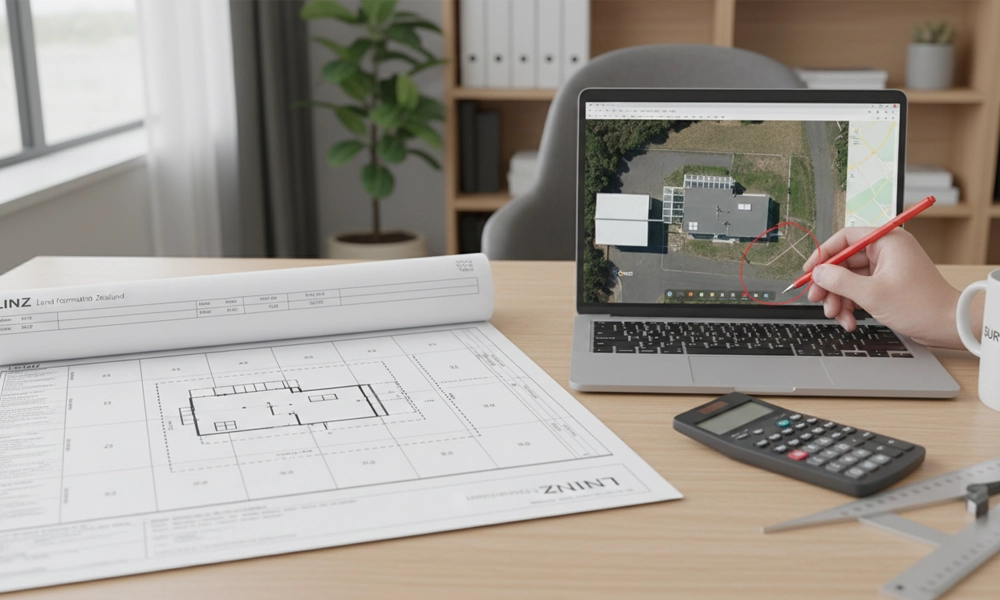
This is the "blueprint." It is a physical diagram registered with Land Information New Zealand (LINZ) that shows the exact footprint of every building on the land. If your building's physical footprint does not match this registered diagram, you are dealing with a defective title.
The Anatomy of the Flat Plan
The Flat Plan is your most important tool during due diligence to ensure you don't inherit a defective title. It visually defines:
- Restricted Areas: Your private yard or garden.
- Common Areas: Shared spaces like driveways or access ways.
- Flat plan: The literal outline of your house and any attached garages.
When Does a Title Become “Defective”?
A cross-lease title is considered a defective title when the legal Flat Plan does not match the physical reality of the property. In the eyes of the law, if your house has grown or changed shape but the plan hasn't been updated, the title is "defective"
Common reasons for a defective title in 2026 include:
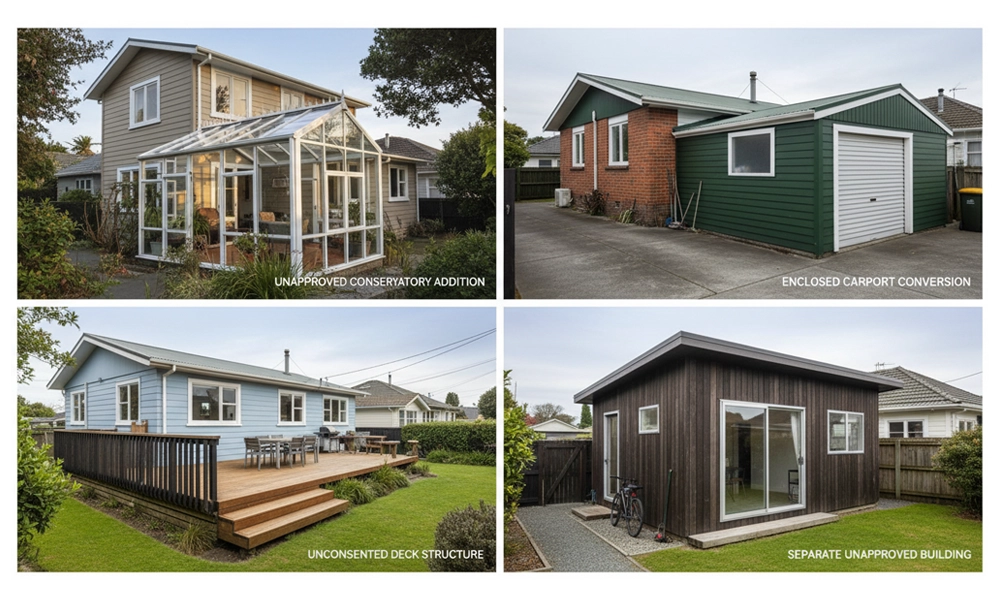
Classic Conservatories
Many owners in the ‘90s added sunrooms or conservatories. If these aren't on the Flat Plan, it's a defective title.
Enclosed Carports
Turning a carport into a garage changes the "external dimensions" of the building, which requires a plan update to fix the defective title.
How Cross-Lease Ownership Differs from Freehold
In New Zealand, "Freehold" (Fee Simple) is often seen as the ultimate form of ownership. With freehold, you own the land and buildings outright. Cross-leases introduce a layer of "neighbourly oversight" where a defective title can occur more easily:
Shared Responsibility
You often share the cost of driveway repairs, tree maintenance, and even boundary fences.
Consent Hurdles
Want to paint your house a bold new colour? Or perhaps add a heat pump unit to the exterior wall? Technically, your lease might require you to ask your neighbour first.
Boundary Complexity
Your boundaries aren't just lines on a map; they are dictated by the "Exclusive Use" clauses in your lease.
Why Are Defective Titles So Common in NZ?
The high number of properties with a defective title is usually down to a simple misunderstanding of the rules.
- Consent Gaps: Owners often assume that getting Council Building Consent is the only step. They don't realise they also have to hire a surveyor and a lawyer to update the Flat Plan with LINZ. Without this, the work results in a defective title.
- Historical DIY Culture: New Zealand’s love for DIY meant many small additions were done without professional oversight. Over the decades, these small changes have accumulated into a significantly defective title.
- Cost Barriers: Updating a title used to be seen as a "future problem." Now, in 2026, banks and insurers have made a defective title an "immediate problem" for buyers and sellers alike.
Why You Should Care About Defective Titles?
A defective title isn't just a paperwork "whoopsie." It has significant financial and legal teeth:
For the Seller, Losing Negotiation Power
A buyer’s lawyer will spot the defective title during due diligence and likely demand a price reduction, often between $15,000 and $25,000 to cover the cost of a future fix.
A buyer can formally "requisition" the title, meaning you are legally obligated to fix the defective title before settlement can occur. This can delay your sale by months.
For the Buyer, Finance Hurdles
Banks are incredibly conservative. Many major NZ lenders will decline a mortgage application if there is a defective title, or they may impose a condition that you fix it within 12 months of moving in. If your house is damaged and the "unrecorded" extension is part of that damage, your insurance company may refuse to pay out for that specific portion because of the defective title.
Navigating Neighbour Dynamics and Consents
One of the most stressful parts of a cross-lease is dealing with neighbours, especially when you need to resolve a defective title. Because you are co-owners, you need their written consent for almost any structural change.
What happens if a neighbour says "No"? Most modern leases state that consent cannot be "unreasonably withheld." However, defining "unreasonable" often leads to legal disputes. Valid reasons for a neighbour to say no include loss of sunlight, privacy, or impact on views.
The Fix: Rectification vs. Conversion to Freehold
If you discover a defective title, you have two main paths. Each has its pros and cons.
Option A: Title Rectification
This involves updating the existing cross-lease structure to clear the defective title. Surveying: A licensed surveyor draws a new Flat Plan.
Consent: You get all other cross-lease owners to sign the new plan.
Legal Work: Your lawyer prepares a new lease and registers the updated plan with LINZ to fix the defective title.
Outcome: Your title is no longer "defective," making it bank-friendly again.
Option B: Conversion to Freehold
Many homeowners choose to skip the "patch" and convert the property to a Fee Simple (Freehold) title. This is the ultimate way to eliminate a defective title once and for all. Subdivision: You effectively subdivide the land so everyone owns their own patch.
New Titles: The cross-lease is cancelled, and new freehold titles are issued.
Pros: It typically adds 10-15% value to your property instantly and removes the defective title permanently.
How Defects are Discovered During a Sale
In 2026, the property market moves fast, but the due diligence is more thorough than ever. A defective title is usually caught during The Initial Walkthrough. Savvy buyers now bring a copy of the Flat Plan to the open home to check for a defective title.
At Absolut Legal, we perform a "Title and Plan Match" as part of our standard conveyancing service. We compare the LINZ records with the Council’s aerial photos to identify a defective title early. If your bank also requires an on-site valuation, the valuer will almost certainly flag any footprints that don't match the legal title as a defective title.
The Role of Insurance in Cross-Lease Matters
Insurance is a hidden trap for cross-lease owners. In a shared ownership structure, a defective title on one flat can affect the "legal wellbeing" of the entire group. We strongly recommend:
If possible, have all owners on the cross-lease use the same insurance provider.
For buyers, title insurance can provide a safety net. It protects you against losses if a defective title is found after you’ve already bought the house.
Why You Need a "Trusty Sidekick" for Your Cross-Lease
Cross-lease law is technical, ancient, and unforgiving. Small errors in a lease amendment can stay with a property for 999 years. At Absolut Legal, we don't just "do the law"; we protect your investment. We offer: Fixed Fees: You’ll know exactly what the legal work to fix a defective title costs upfront. Straight Talk: We explain the risks of a defective title in plain English, not "legalese." Family Treatment: We treat your transaction with the same care and urgency we would for our own family.
FAQs About Defective Cross-Lease Titles in NZ
What is a defective cross-lease title in NZ?
A defective title occurs when the legal documents (specifically the Flat Plan) do not accurately reflect the physical buildings on the site. This usually results from renovations or additions that were never updated on the registered title with LINZ.
How can a defective title affect my property purchase?
A defective title can cause significant delays in settlement, lead to your bank declining your mortgage, or result in insurance companies excluding parts of the building from your policy. It also generally reduces the resale value of the property.
What legal solutions exist for defective cross-lease titles?
The most common solutions are Title Rectification (updating the existing plan) or Conversion to Freehold (cancelling the cross-lease entirely). A lawyer can also help draft retrospective consent letters if the breach leading to the defective title is minor.
Can I get insurance for defective titles?
Yes, but with caveats. Standard house insurance may exclude unrecorded structures. Title Insurance is often used as a "band-aid" during a sale to protect the buyer and lender against a defective title, but it does not fix the underlying legal defect.
Is a LIM report enough to detect a defective title?
No. A LIM report only shows Council-held information (like building permits). It does not verify if those structures were ever added to the Flat Plan on your title. Only a legal title review can confirm a defective title.
Is your cross-lease causing you stress?
Whether you’re buying your first home or getting ready to list your property, the team at Absolut Legal is here to help. Based in Christchurch and serving all of New Zealand, we make property law simple, transparent, and hassle-free.

